 Knowledge Sharing
APEC CTF HIGHLIGHTS STRATEGIC FORESIGHT FOR TECHNOLOGY TRANSFER IN CHONGQING
APEC CTF HIGHLIGHTS STRATEGIC FORESIGHT FOR TECHNOLOGY TRANSFER IN CHONGQING

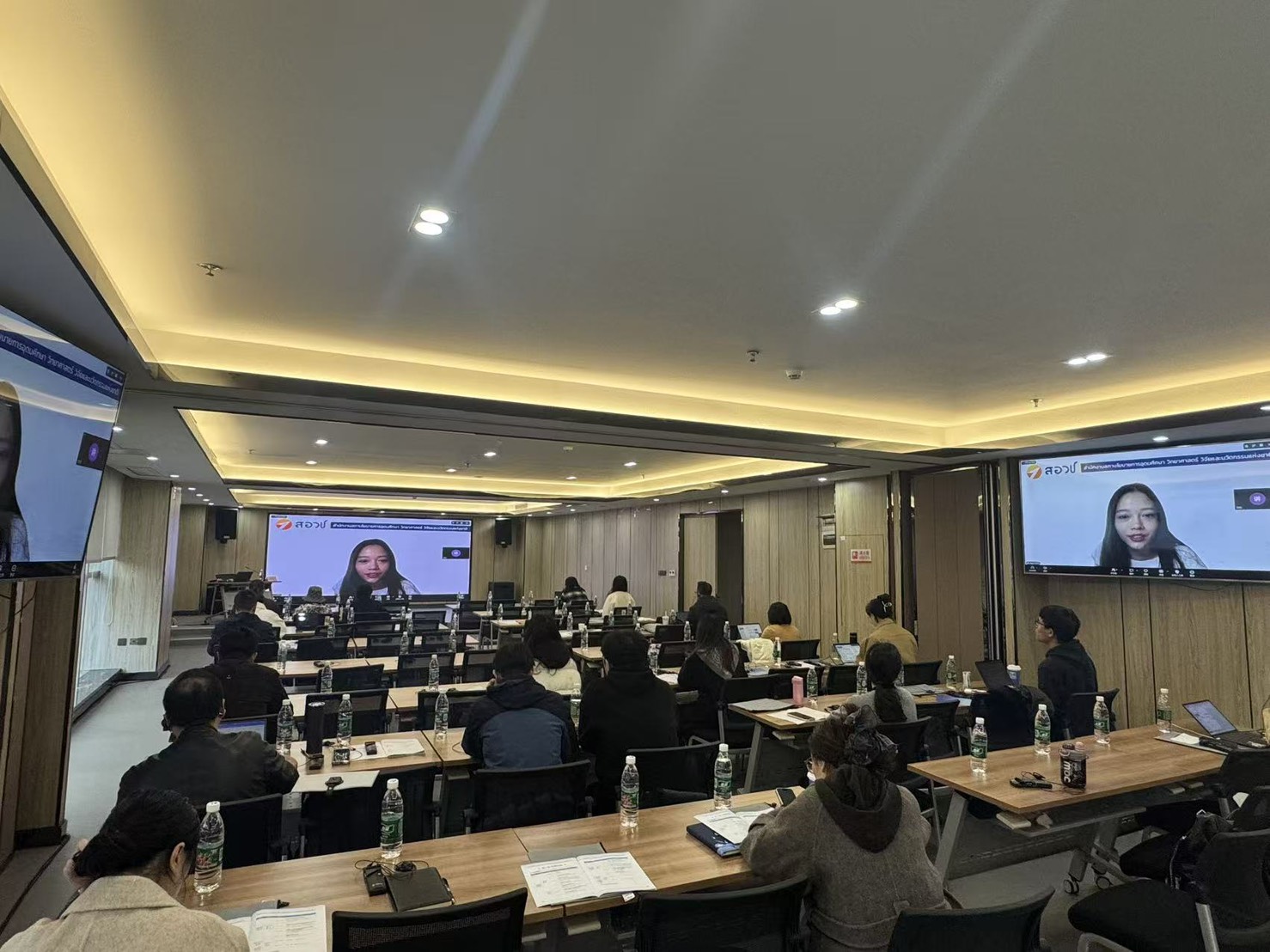
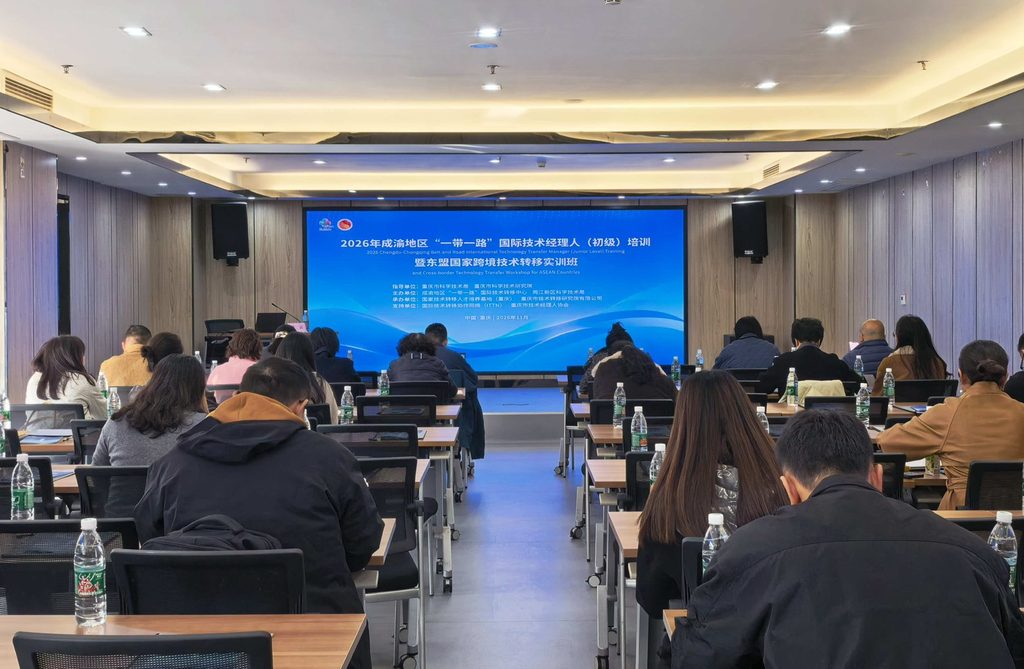
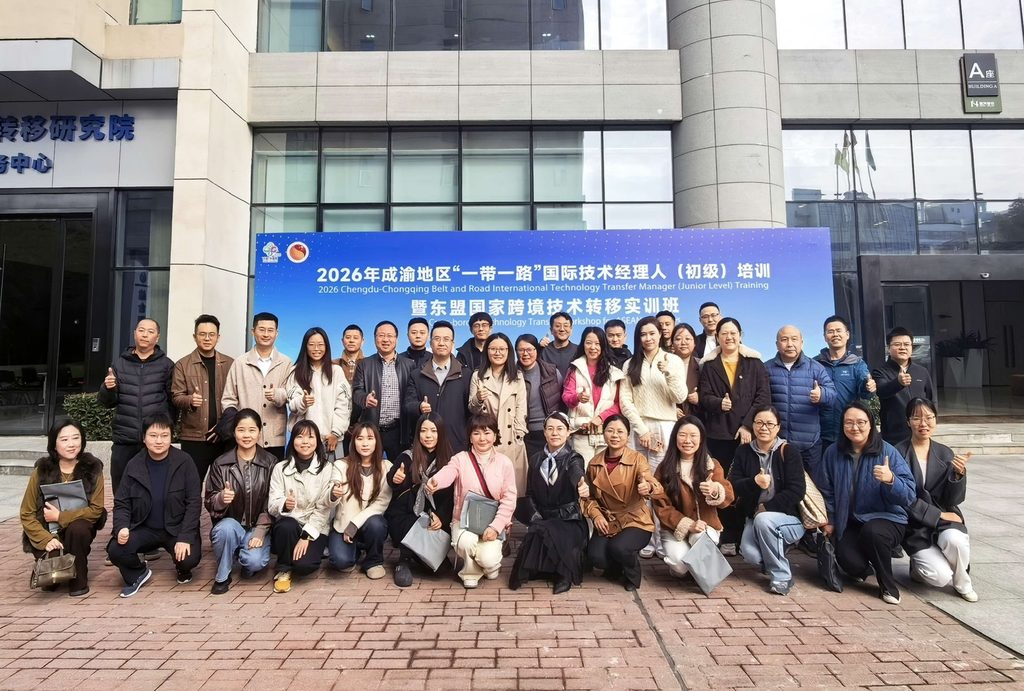
The Office of National Higher Education, Science, Research and Innovation Policy Council (NXPO) – APEC Center for Technology Foresight (APEC CTF), represented by Mrs. Jirapan Christian Linares, Policy Developer, NXPO – APEC CTF, delivered an online lecture titled “From Foresight to Transfer: Technology Roadmapping and Thailand’s Innovation Ecosystem” in the session “Case Sharing on Science, Technology, Innovation and Technology Transfer in Thailand”. The session was part of the 2026 Chengdu-Chongqing Belt and Road International Technology Transfer Manager (Junior Level) Training and Cross-border Technology Transfer Workshop for ASEAN Countries, organized by the Chongqing Institute of Technology Transfer Co., Ltd. (CQITT) and partner organizations on 23 November 2026 at Zhongke Zhigu, Liangjiang New Area, Chongqing, People’s Republic of China. It took place within the 2026 China-ASEAN Week, marking the 5th anniversary of the China-ASEAN Comprehensive Strategic Partnership.
Mrs. Jirapan opened the lecture with an interactive activity, inviting participants to imagine what their technology transfer workplace would look like in 2036. She then posed a key question: why do so many good technologies fail to cross the “Valley of Death” from the laboratory to the market? She presented Thailand’s experience through four dimensions: 1. Structure: Thailand’s science, research and innovation (SRI) ecosystem; 2. People: the role of staff and units related to intellectual property management and technology transfer, such as technology transfer offices (TTOs); 3. Rules: the Thailand Research and Innovation Utilization Promotion Act (TRIUP Act); and 4. Direction: strategic foresight.
On the ecosystem, Mrs. Jirapan explained that Thailand’s SRI ecosystem separates the roles of policy, funding allocation and implementation, with the National Higher Education, Science, Research and Innovation Policy Council acting as the link between them and NXPO serving as its secretariat. Thailand ranks 44th of 139 economies in the Global Innovation Index (GII) 2026, and the share of gross domestic expenditure on R&D financed by business (GERD financed by business) is among Thailand’s best-ranked indicators (5th). This shows that the private sector is already investing in R&D, while the key gaps remain in institutions, Thailand’s lowest-ranked area (80th), and in linkages across sectors.
On the role of TTOs, Mrs. Jirapan gave examples of four types of technology transfer units: universities, science parks, research institutes and private companies. These units act as brokers who must understand the needs of both researchers and the market, now and in the future. She also outlined the career path of technology transfer professionals, from managing deals to deciding which technologies to work on, and when.
On rules, she presented the key points of the TRIUP Act, in force since 7 May 2022. The Act allows grantees or researchers to own the results of publicly funded research, with an obligation to put them to use within two years and to report annually to the funder.
On the final dimension, Mrs. Jirapan observed that conventional technology transfer usually starts from what has been discovered, then moves to patenting and finding a buyer or user. A foresight-driven approach instead starts by asking what the future will need, then develops research to meet that need, so as to find the right partner at the right time. In other words, ownership tells us who can transfer, while foresight tells us what to transfer and when. She also introduced the APEC Center for Technology Foresight (APEC CTF), which is hosted by NXPO and has been the first and only regional foresight centre in APEC since 1998. She further presented technology roadmapping, which helps answer what to transfer, to whom and when, as well as the case of Thai University Holding Companies, which are shifting from IP brokers to ecosystem enablers.
Share


 Back